Last week, nearly 700 insurance professionals gathered in Orlando for the 15th annual MCIEF Trucking Insurance Conference. The sessions were excellent, and the message was clear: the bar for trucking insurance agents is rising fast.
Here’s what stuck with me:
The advisory burden just got heavier. Session after session reinforced the same theme: agents need to go deeper with their clients.
The business interruption workshop showed how small carriers, the 1-to-5-truck
operators that make up the bulk of the market, are dangerously underinsured. Not
because coverage doesn’t exist, but because agents aren’t structuring it properly. Do you know the difference between building and business personal property in a
commercial package policy? Do you know that a permanently installed press in a
garage counts as building, not personal property, and that misallocating limits triggers a coinsurance penalty at the worst possible time? Do you know that extra expense coverage, not loss of income, is what actually keeps a trucker in business after a catastrophe?
Hurricane Helene wiped out carriers in western North Carolina who had no idea this coverage was available. Their agents never offered it. That’s an E&O exposure waiting to happen. The claims panels were equally pointed. Tractor values have swung from $185K to $260K and back to $160K in the span of a few years. Towing costs now exceed $200K per major incident. Stated amount policies pay ACV or stated amount, whichever is less, and underinsuring for premium savings can blow up in your client’s face. Agents were told to verify equipment values annually, review towing endorsements, and understand how physical damage, liability, cargo, and rental reimbursement interact when a crash happens.
Meanwhile, every carrier on the late-reporting panel, Canal, Northland, IAT, is
pushing hard for package policies over monoline auto liability. Package business shows a 10-point better loss ratio. That means agents are now expected to quote and bind across more coverage lines per account, not fewer.
Add it all up: the industry is asking agents to go narrow and deep. Know the coverage. Structure it right. Counsel the client. Review it every year.
So where does the time come from? This is the question nobody at the conference asked, but everyone in the room is living.
If you’re an agency handling trucking accounts, you already know what your days
actually look like. You’re pulling data from your AMS, re-entering it into a carrier portal, toggling between tabs, copying vehicle schedules, manually keying driver lists, and doing it again for the next market. For a 10-truck account across three carriers, that’s hours of repetitive data entry before you’ve done a single minute of actual advisory work.
The conference made the case that agents need to be calculating coinsurance factors, evaluating business interruption structures, verifying equipment valuations, and having real coverage conversations with their insureds. But you can’t do that work if your day is consumed by portal data entry. You can’t go deep on coverage strategy when you’re shallow on time.
The agents who are going to thrive in this market aren’t the ones who can type fastest into carrier portals. They’re the ones who free themselves from that work entirely, so they can focus on the consultative, high-judgment work that actually protects their clients and justifies their commission.
The bottom line MCIEF 2026 raised the standard for what a trucking insurance agent needs to know and do. The coverage is more complex, the carriers are more selective, the litigation environment is more hostile, and the regulatory landscape is shifting under everyone’s feet.
The agents who will win are the ones who treat portal automation not as a nice-to-have, but as the prerequisite for doing the real work. Unshackle yourself from the data entry,and you can actually deliver on what the industry is asking of you.
That’s what we’re building at Gaya.
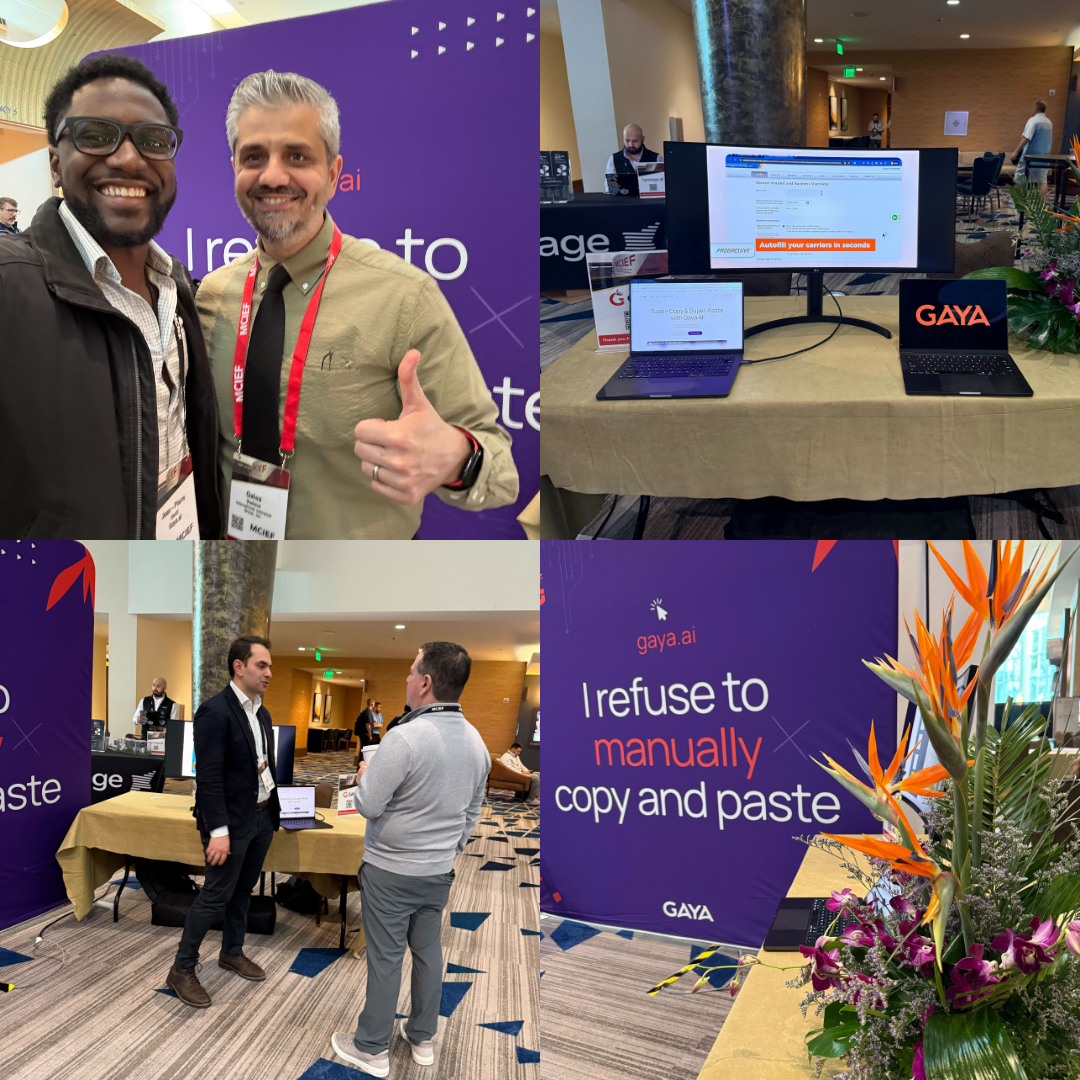
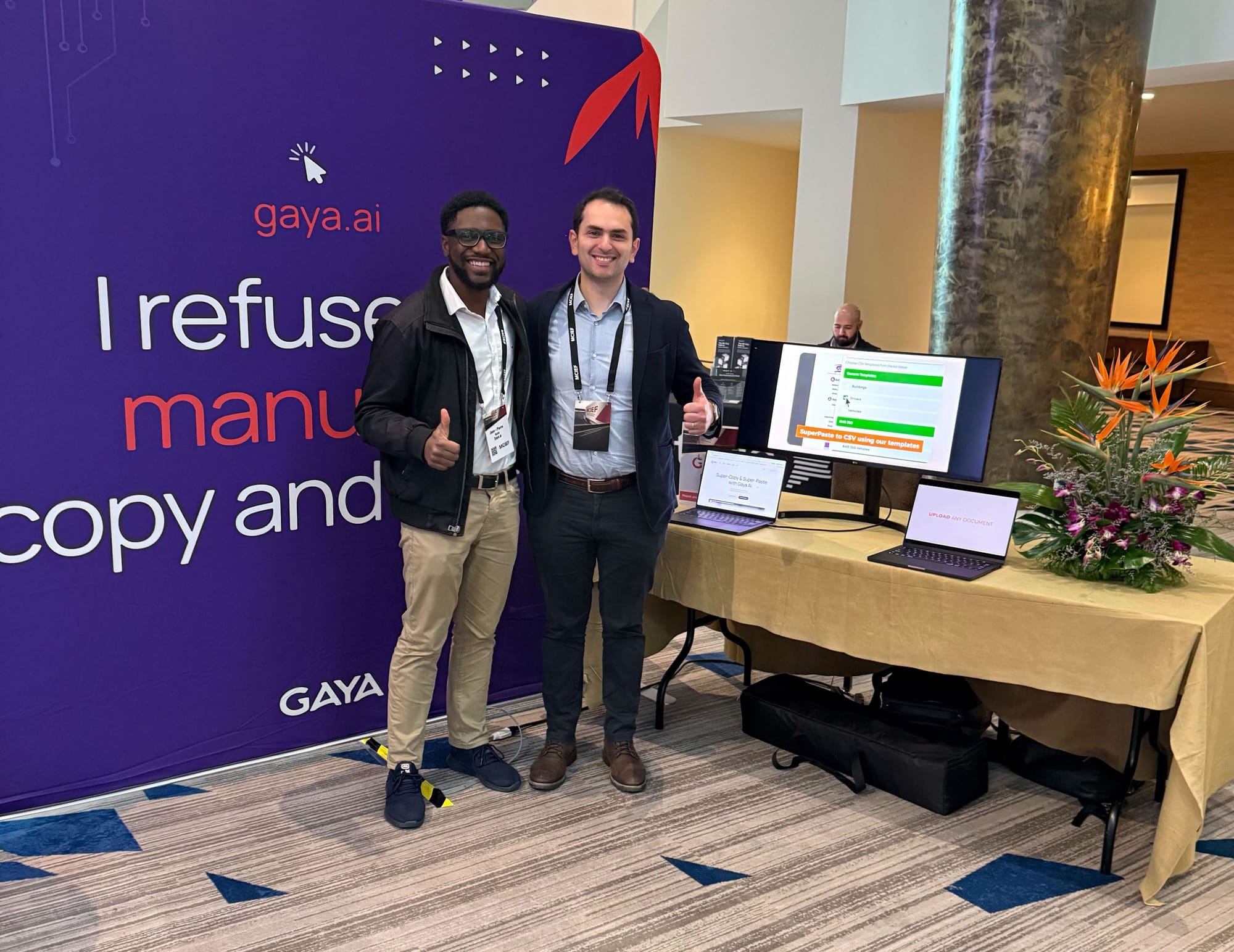
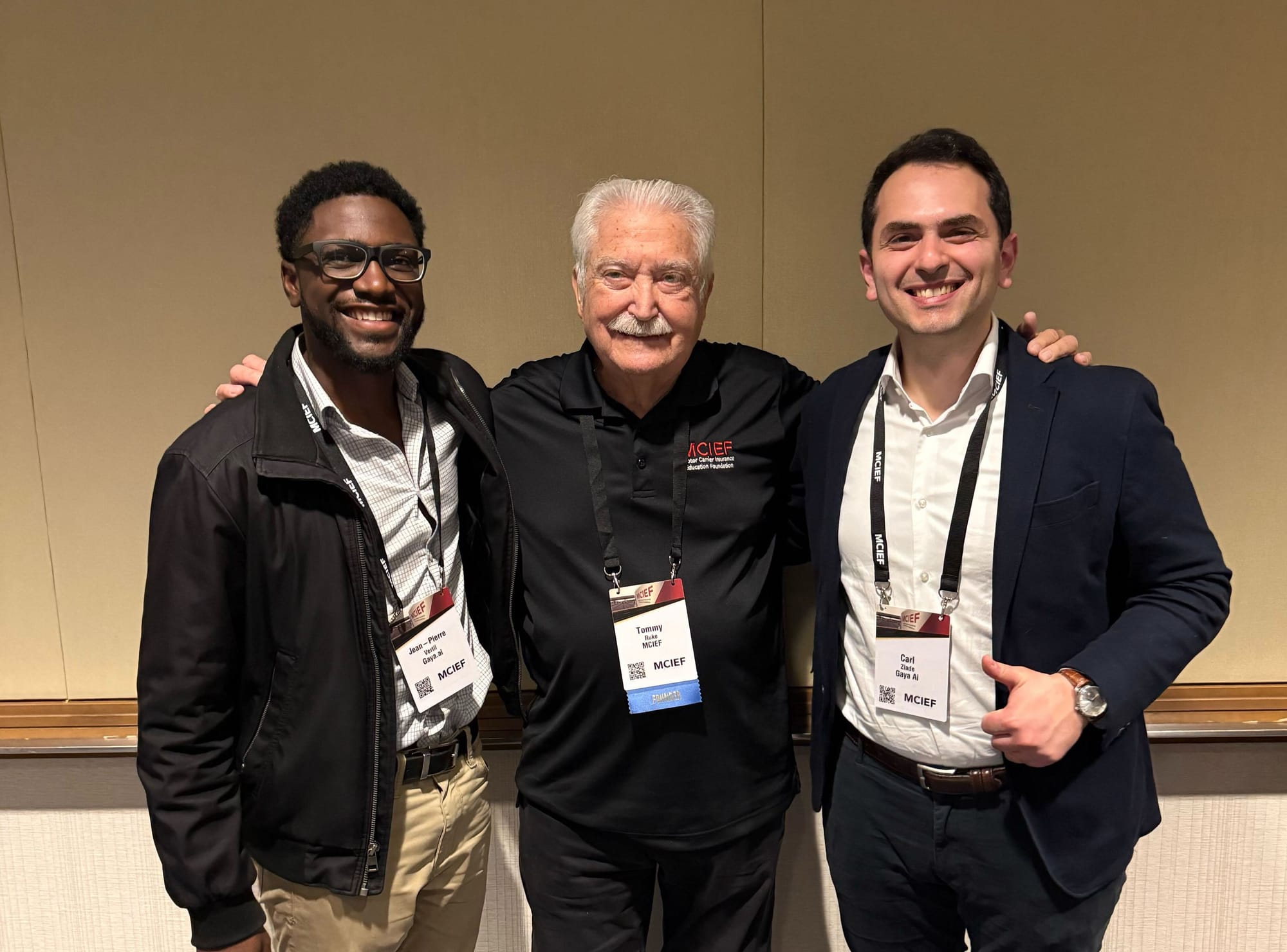
JP Vertil on the left is CTO and Carl Ziade on the right is CEO and both are co-founders of Gaya (gaya.ai), which automates carrier portal data entry for insurance agencies.
Book a demo at Gaya.ai to see how it works.